
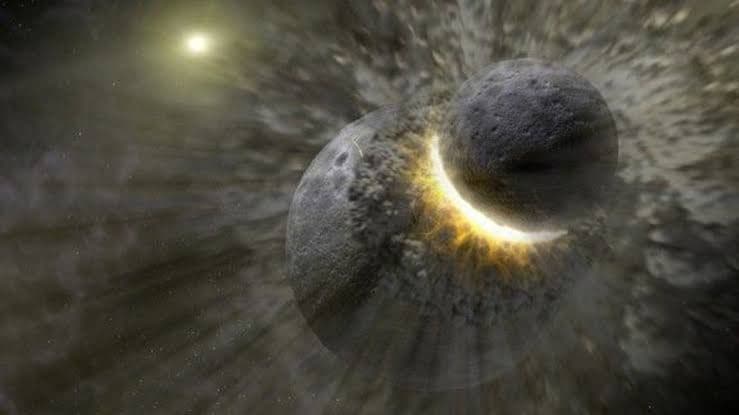
The research, led by scientists from the University of Western Australia, examined feldspar crystals in ancient anorthosite rocks from the Murchison region. The researchers analysed their strontium and calcium isotope compositions to investigate the chemical history of Earth’s early mantle.
The team then compared the findings with measurements from lunar anorthosite samples returned by NASA’s Apollo missions. According to the researchers, the comparison is consistent with Earth and the Moon having had a similar starting composition around 4.5 billion years ago.
The findings support the widely accepted giant-impact hypothesis, which proposes that a large planetary body collided with the young Earth and that material from the collision eventually formed the Moon. However, the study should be described as supporting or adding evidence to the theory, rather than definitively proving that Earth and the Moon were “mixed together” in the impact.
The research was published in Nature Communications, and the University of Western Australia says it also suggests that significant continental growth on Earth began around 3.5 billion years ago.
Verdict: TRUE, with context. The underlying scientific finding is genuine, but the original headline simplifies what the research actually demonstrates.
University of Western Australia