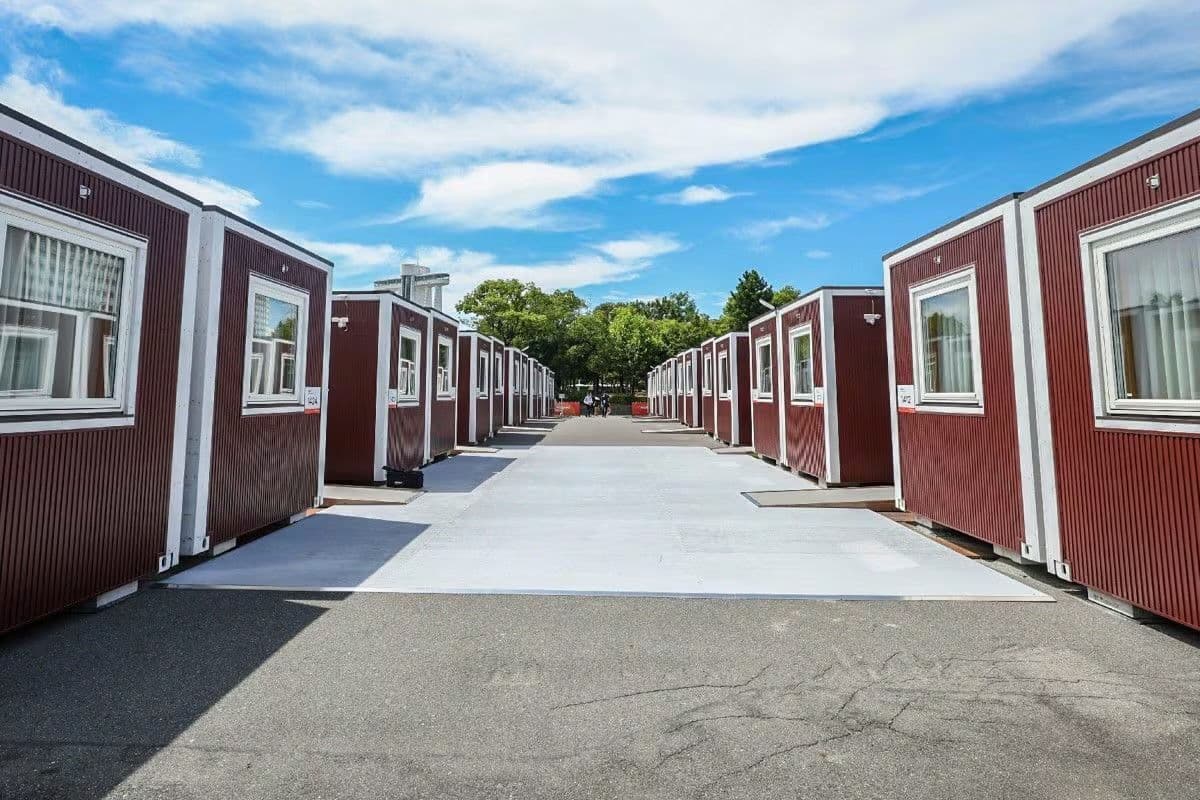
The Asian Games are being held in the Aichi-Nagoya region of Japan, with the opening ceremony scheduled for Saturday, September 19. More than 17,000 athletes and officials from 45 countries and territories are expected to take part in the Games. Unlike many major international sporting events, organisers did not build a dedicated athletes’ village for this edition. Instead, participants are being accommodated in hotels, a cruise ship and temporary wooden container-style units.
The temporary accommodation has faced criticism from some participating teams. South Korean officials have complained that some of the beds in the container-style rooms are too short, while officials from several countries have raised concerns about shortages of rooms. A South Korean basketball player also posted a video on social media showing a leaking sink and water on the floor inside his accommodation.
In response, Hideaki Omura, president of the Asian Games organising committee and governor of Aichi Prefecture, said organisers were working to address individual complaints and improve the facilities where necessary. Omura defended the design of the temporary accommodation, saying it had been assessed by a committee that included former athletes and Olympians. According to him, the committee had inspected the facilities and considered them functional.
The accommodation plan was partly designed to reduce costs. Around 9,000 participants are expected to stay in hotels, while about 4,000 will be accommodated on the Italian cruise ship Costa Serena. Another 2,000 people are expected to stay in the temporary wooden container units. Reuters reported that organisers have also been working to resolve complaints and deal with accommodation arrangements as more participants arrived.
The unusual accommodation arrangements have also been affected by the weather. Nagoya experienced heavy rainfall in the days leading up to the Games, and hundreds of athletes were briefly evacuated from their accommodation. Japan is also entering a period when typhoons can affect the region, adding another challenge for organisers preparing for the event.
Despite the complaints, organisers say they are continuing to make improvements and respond to the concerns raised by participating teams. Omura said the priority was to provide accommodation that keeps athletes and officials safe and allows them to perform at their best.
The 20th Asian Games will officially open in Nagoya on September 19 and run until October 4. Athletes from 45 countries and territories are expected to compete in more than 40 sports. Some events, including basketball and football, have already begun ahead of the opening ceremony.
The accommodation controversy comes as Japan prepares to host one of Asia’s biggest sporting events, with organisers facing the challenge of balancing costs, logistics, athlete comfort and safety while the Games get underway.