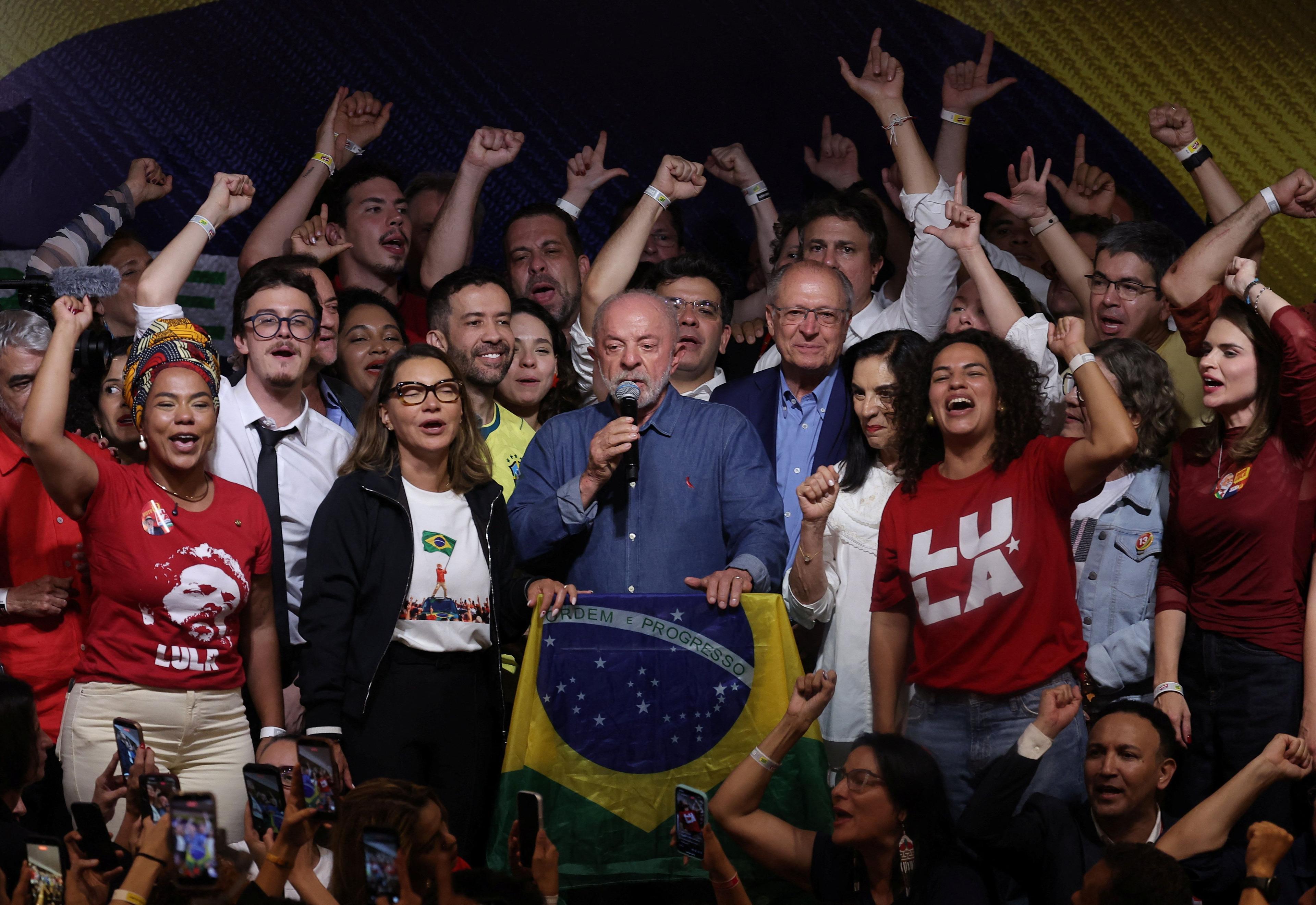
Official figures released by Brazil’s Superior Electoral Court show that Lula secured 51.79 per cent of valid votes, equivalent to more than 64.2 million ballots. Bolsonaro received 48.21 per cent, or approximately 59.8 million votes.
The 80-year-old leader’s victory marks a significant political comeback. Lula had finished behind Bolsonaro in the first round of voting on 4 October, but recovered during the runoff campaign to secure another four-year term.
The result also makes Lula the first person in Brazil’s democratic era to be elected president four times. His previous victories came in 2002, 2006 and 2022.
However, Bolsonaro has refused to accept the outcome and has called for the result to be annulled, citing objections to a last-minute decision to extend voting hours in some areas.
The extension followed reports of transport difficulties and severe weather that affected access to polling stations. Brazil’s electoral authorities maintained that the final result was valid, while legal experts questioned whether Bolsonaro’s objections provided sufficient grounds to overturn the outcome. <Cite refs={["turn562837search4","turn562837news24","turn562837search12"]}/>
Bolsonaro, a senator and son of former president Jair Bolsonaro, campaigned on a conservative platform and received support from political figures aligned with US President Donald Trump. His defeat prevents Brazil, Latin America’s largest economy, from joining a number of countries in the region that have recently elected right-wing leaders.
Lula’s campaign focused on social welfare, economic opportunity, national sovereignty and the protection of democratic institutions. He also sought to mobilise voters through social media and public rallies during the final stages of the campaign.
Following his victory, Lula pledged to govern for all Brazilians and defend the country’s independence in international affairs. His next administration is expected to face significant challenges, including public security concerns, economic pressures and a Congress in which conservative forces remain influential.
The election result is also likely to shape Brazil’s foreign policy, particularly its relationships with the United States, China and the wider BRICS grouping. Lula has advocated a more independent international position and stronger cooperation among developing economies.
Although the official result gives Lula a clear victory in the vote count, Bolsonaro’s challenge means political tensions are likely to continue as the dispute proceeds. Lula is scheduled to begin his fourth presidential term in January 2027.
The election represents a major moment for Brazil’s democracy, with voters choosing continuity under Lula while the opposition disputes the result. The coming weeks will test the ability of the country’s institutions to manage the challenge and maintain confidence in the electoral process.

Khalil Ibrahim Yaro
Experienced journalist, Editor in Chief and media professional with a strong background in field reporting, investigative journalism, Editorial production, interviewing, research, digital media and newsroom coordination.
More from Khalil Ibrahim Yaro