The Dangote Petroleum Refinery and Petrochemicals has officially opened its initial public offering, offering investors an opportunity to acquire shares in one of Africa’s largest industrial projects.
The share offer opened on Monday, September 14, with the company offering about 4.1 billion shares at 525 naira per share.
The offer is targeting approximately 2.15 trillion naira, equivalent to about 1.6 billion dollars, making it one of the largest public share offerings in Africa.
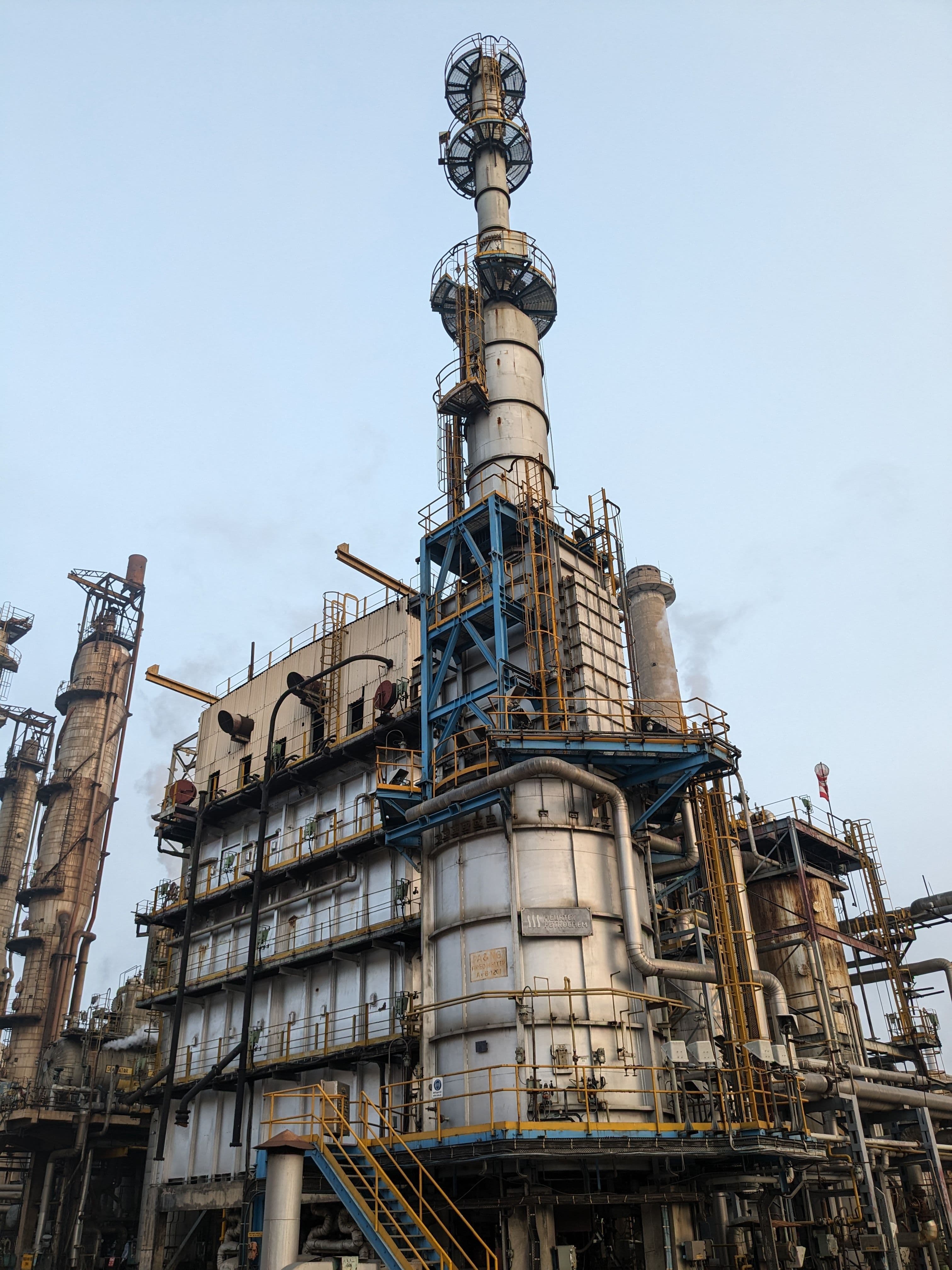
The refinery, located in Lagos, currently has a refining capacity of about 700,000 barrels of crude oil per day.
The proceeds from the share sale are expected to support the company’s expansion plans, including a proposed increase in refining capacity to about 1.4 million barrels per day.
The public offering is also being promoted as an opportunity for ordinary Nigerians and retail investors to take ownership stakes in the refinery.
The minimum subscription is reportedly set at 10 shares, making the entry point 5,250 naira at the offer price.

Pexels
The Dangote Refinery began operations in 2024 and has increasingly become an important part of Nigeria’s petroleum industry, helping the country move from heavy dependence on imported refined petroleum products toward greater domestic refining and exports.
The share offer is expected to attract significant attention from Nigerian investors and the wider African investment community.
The offer is scheduled to remain open until October 13, while trading of the shares is expected to begin later in November, subject to the relevant regulatory and listing processes. ([Reuters][1])
Meanwhile, Nigeria’s 112 Federal Unity Colleges are facing the possibility of disruption as workers threaten to interfere with the reopening of the schools.
The Federal Government has insisted on the reopening of the schools, but workers are reportedly preparing to oppose the planned concession of the institutions.
Nigeria has 115 Federal Unity Colleges, with 112 expected to resume for the new academic term.
The dispute centres on a proposed concession plan for the schools, with workers and their representatives raising concerns about the implications of handing aspects of the management of the institutions to private operators.
The Federal Government, however, has maintained that the schools should reopen as scheduled.
The disagreement has created uncertainty for thousands of students and parents who depend on the Federal Unity Colleges for secondary education.
The schools form part of Nigeria’s federal education system and were established to provide students from different parts of the country with opportunities to study together.
Any disruption to their reopening could therefore affect the academic calendar and create additional uncertainty for families preparing for the new school term.
The dispute now places pressure on the Federal Government and the workers to reach an understanding before the reopening date, particularly to prevent students from becoming the main casualties of the disagreement. ([The Guardian Nigeria][2])
In the foreign-exchange market, the Nigerian naira opened the new trading week relatively stable against the United States dollar.
The official exchange rate was reported at about 1,326.84 naira to the dollar on Monday, September 14.
The rate reflects trading in Nigeria’s official foreign-exchange market, while the parallel market continues to quote the dollar at a higher level.
Reports put the parallel-market rate at approximately 1,380 naira for buying and around 1,390 naira for selling.
The difference between the official and parallel-market rates remains an important indicator of conditions in Nigeria’s foreign-exchange market.
The recent relative stability of the naira comes amid efforts by the Central Bank of Nigeria to improve foreign-exchange liquidity and reduce volatility.
Market participants will continue to monitor dollar supply, crude-oil earnings, foreign reserves, investor inflows and monetary-policy decisions as factors that could influence the naira in the coming days.
The currency’s performance also remains closely linked to developments in the international oil market because crude oil exports remain a major source of Nigeria’s foreign-exchange earnings.
For now, the official rate remains around the 1,320 to 1,330 naira range, while traders continue to watch whether the recent stability can be sustained. ([Techeconomy][3])
In another major development in Nigeria’s financial sector, the Bank of Industry and RMB Nigeria have marked the successful issuance of a 274.18 billion-naira domestic bond.
RMB Nigeria acted as a Joint Issuing House for the Bank of Industry’s inaugural domestic bond issuance.
The transaction represents another major development in Nigeria’s domestic capital market and provides the Bank of Industry with additional funding capacity to support its mandate of financing industrial and economic development.
The bond issuance was formally marked at a ceremony in Lagos attended by representatives of the financial institutions and other stakeholders in Nigeria’s capital market.
The Bank of Industry is one of Nigeria’s major development-finance institutions, providing funding to businesses and projects across sectors of the economy.
Its access to long-term financing through the domestic bond market can provide additional resources for supporting industries, businesses and other productive activities.
For RMB Nigeria, the transaction also highlights the role of investment banks in helping major institutions raise funds through Nigeria’s capital markets. ([Nairametrics][4])
Taken together, the four developments highlight several important trends in Nigeria’s economy and public institutions.
The opening of the Dangote Refinery share offer represents a major moment for the Nigerian capital market and gives investors the opportunity to participate in the ownership of one of the country’s most significant industrial projects.
At the same time, the dispute involving Federal Unity Colleges shows the continuing challenges surrounding the management and financing of public educational institutions.
The naira’s relative stability provides some positive news for businesses and consumers who depend on foreign exchange, although the difference between official and parallel-market rates remains an issue for the wider economy.
And the Bank of Industry’s 274.18 billion-naira bond issuance demonstrates continued activity in Nigeria’s domestic debt and capital markets.
Investors, businesses, policymakers and ordinary Nigerians will be watching these developments closely as the week progresses.
For the Dangote Refinery, attention will focus on investor demand and the eventual performance of the shares once trading begins.
For the Federal Unity Colleges, the immediate priority will be resolving the dispute between the government and workers to avoid disruption to students and the academic calendar.
For the naira, the focus will remain on whether the currency can maintain its recent stability amid changing global and domestic economic conditions.
And for the Bank of Industry, the latest bond issuance is expected to strengthen its ability to mobilise long-term funding for industrial development.
These developments come at a time when Nigeria is continuing to navigate significant economic reforms, investment opportunities and institutional challenges.
The coming weeks will therefore be important for determining whether the positive signals in the capital and foreign-exchange markets can be sustained, while policymakers work to resolve the challenges affecting education and other public institutions.

Rukayya Mu'az
A dedicated broadcast journalist with Glob Hub Media, passionate about news reporting, storytelling, and public-interest journalism.
More from Rukayya Mu'az