The lawsuit was filed on Monday, September 14, 2026, in federal court in Manhattan and is being led by New York Attorney General Letitia James.
The legal challenge targets a new Department of Homeland Security policy expanding the federal government’s so-called public charge test.
The rule is scheduled to take effect on September 18, meaning the lawsuit has been filed just days before the policy is due to be implemented.
Under U.S. immigration law, the public charge test is used in certain immigration decisions to determine whether a person is likely to become primarily dependent on government assistance.
The new Trump administration rule would broaden the range of public benefits that immigration officials can consider when making that assessment.
Those benefits can include programs such as Medicaid, food assistance and housing-related support.
The states challenging the rule argue that the expanded policy gives immigration officials too much discretion and could create fear among immigrant families who rely on government programmes for healthcare, food or other basic needs.
The plaintiffs say that fear could discourage eligible families from using public assistance even when they are legally entitled to receive it.
New York Attorney General Letitia James has argued that the policy could force immigrant families to make a difficult choice between accessing essential assistance and protecting their immigration prospects.
The states also argue that the impact could extend beyond immigrants who are directly applying for permanent residence.
Many immigrant households include U.S. citizens, including children who may independently qualify for government programmes.
The coalition says families could nevertheless avoid those programmes because of concerns that the use of benefits by household members could affect an immigrant relative’s application.
The states further argue that the policy could create financial consequences for state governments and healthcare systems.
They contend that if eligible families withdraw from programmes such as Medicaid and food assistance, costs could shift to hospitals, community health providers and state governments.
The lawsuit is asking the federal court to declare the rule unlawful and prevent the Department of Homeland Security from enforcing it.
The states argue that the administration exceeded its legal authority and failed to adequately justify the expanded interpretation of the public charge standard.
The Trump administration, however, is defending the new policy.
Federal officials argue that immigrants seeking permanent residence should be able to demonstrate that they can support themselves and that immigration authorities should be able to consider whether applicants are likely to become dependent on public assistance.
The administration has rejected criticism that the rule improperly targets immigrants and has presented the policy as part of its broader effort to strengthen immigration enforcement and limit dependence on government welfare programmes.
The dispute is not new.
The concept of a public charge has existed in U.S. immigration law for more than a century, although the benefits considered under the test have changed over time.
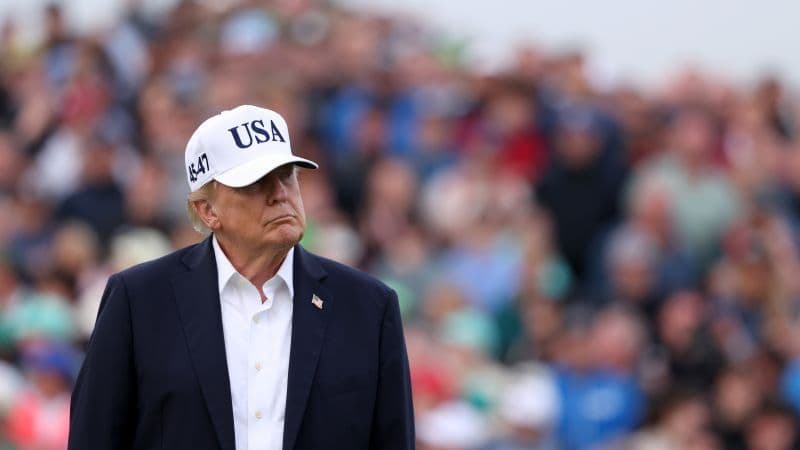
During President Donald Trump’s first administration, officials introduced a broader public charge policy that allowed immigration authorities to consider certain benefits, including Medicaid, food assistance and housing support.
That policy faced extensive legal challenges and was later abandoned under President Joe Biden, whose administration subsequently adopted a narrower interpretation.
The current Trump administration is now seeking to broaden the approach again.
The new rule has triggered legal action not only from state governments but also from cities and counties.
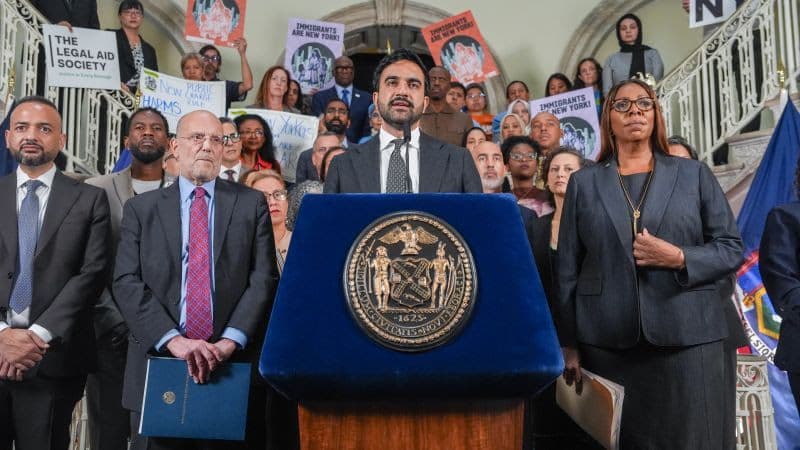
A separate lawsuit has been filed by New York City and a coalition of local governments, including Chicago, San Francisco, Seattle, Santa Clara County in California and King County in Washington.
New York City Mayor Zohran Mamdani announced the separate legal challenge on Monday.
The local governments argue that the rule could discourage immigrant families from accessing healthcare, food assistance and other programmes, potentially increasing pressure on local public institutions.
The two lawsuits are separate but challenge the same federal policy.
The states’ case focuses heavily on the potential effects on state governments, healthcare systems and immigrant families, while the local-government lawsuit emphasises the possible consequences for cities and counties.
The legal battle is now moving rapidly through the federal court system because the rule is scheduled to take effect on September 18.
Unless a court blocks or delays the policy, immigration officials could begin applying the expanded public charge standard according to the administration’s implementation schedule.
The lawsuits do not mean the rule has already been declared unlawful.
Instead, the states and local governments are asking the courts to determine whether the Department of Homeland Security acted within its legal authority when it expanded the policy.
The outcome could have significant consequences for immigrants seeking lawful permanent residence and certain other immigration benefits.
If the rule remains in effect, immigration officials would have greater discretion to consider applicants’ use or potential use of specified public benefits when assessing whether they may become a public charge.
Opponents argue that this could have a wider chilling effect, with immigrant families avoiding services they are legally eligible to receive because they fear consequences for future immigration applications.
Supporters of the rule argue that the government has a legitimate interest in ensuring that people seeking permanent residence can support themselves and do not become primarily dependent on public assistance.
The courts will now have to weigh those competing arguments against existing immigration law and the authority granted to the Department of Homeland Security.
The timing of the lawsuits makes the next few days particularly important.
With the September 18 effective date approaching, the plaintiffs are seeking judicial intervention before the new policy can be fully implemented.
For immigrant families, healthcare providers, state governments and local authorities, the court’s response could determine whether the expanded public charge test takes effect as scheduled or is temporarily blocked.
The dispute also represents another major legal confrontation between the Trump administration and Democratic-led states and cities over federal immigration policy.
Similar conflicts have repeatedly reached the courts during both Trump administrations, particularly over the extent of federal authority to change immigration rules and the consequences of those changes for states and local governments.
For now, the new public charge rule remains scheduled to take effect on September 18, 2026, but its implementation is being challenged in federal court.
The states and local governments want the policy blocked and declared unlawful.
The Trump administration is defending its authority to implement the rule and argues that immigration applicants should be assessed on their ability to support themselves.
As the September 18 deadline approaches, the federal courts will determine whether the expanded public charge policy can proceed.
Whatever the outcome of the initial legal challenge, the case is likely to become another significant test of the limits of presidential and federal agency authority over immigration policy in the United States.

Khalil Ibrahim Yaro
Experienced journalist, Editor in Chief and media professional with a strong background in field reporting, investigative journalism, Editorial production, interviewing, research, digital media and newsroom coordination.
More from Khalil Ibrahim Yaro