
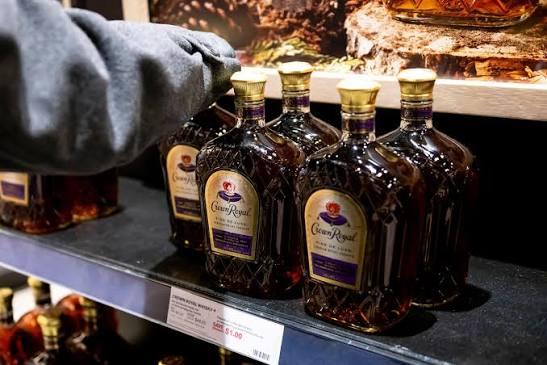
The measure came into force at 12:01 a.m. Eastern Time on Tuesday, September 29, 2026, following a presidential proclamation signed by US President Donald Trump earlier this month.
The White House says the measure applies to specified Canadian alcoholic beverages imported into the United States, although some products are exempt under the proclamation. Goods that had already been imported but had not yet been entered for consumption before September 29 remain subject to the previously imposed 50 per cent tariff.
The latest action is part of a broader trade dispute between the United States and Canada.
The Trump administration argues that Canadian provinces have discriminated against US alcoholic beverages by restricting their purchase, distribution or retail sale while allowing products from other countries to remain available.
According to the White House, US alcoholic beverage exports to Canada fell sharply after Canadian provinces introduced restrictions on US products in 2025. The administration says the restrictions created an unfair disadvantage for American producers.
In July, Trump invoked Section 338 of the Tariff Act of 1930, giving the president authority to impose additional duties of up to 50 per cent when a foreign country is determined to be discriminating against US commerce.
The US Trade Representative confirmed that Section 338 was the legal authority used for the earlier 50 per cent tariffs imposed on certain Canadian products.
The White House subsequently moved from tariffs to an import exclusion covering certain Canadian alcoholic beverages.
The ban does not cover every Canadian alcohol product. Current reporting indicates that some products, including certain bulk spirits used for further processing or bottling, are treated differently under the rules.
The financial impact is therefore expected to vary across the Canadian alcohol industry.
Reuters reports that Canadian producers, particularly smaller distillers that rely heavily on the US market, are facing significant challenges because locally bottled products can no longer enter the US under the affected categories. Larger international companies may have more options, including shifting some bottling operations to the United States.
The measure also comes alongside other US restrictions on Canadian products, including certain dairy products and motorcycles, further broadening the trade confrontation between the two countries.
The dispute has raised concerns about the wider economic relationship between the two North American neighbours, whose economies are closely connected through trade and supply chains.
For American consumers, the immediate effect is expected to depend on the type of Canadian product involved, existing inventories and the exemptions contained in the new rules.
The latest action is now in force, while negotiations between Washington and Ottawa continue over the broader trade relationship.

Khalil Ibrahim Yaro
Experienced journalist, Editor in Chief and media professional with a strong background in field reporting, investigative journalism, Editorial production, interviewing, research, digital media and newsroom coordination.
More from Khalil Ibrahim Yaro